

Market Structure Lens #1 — The Cost Layer: Why Most Backtests Are Quietly Lying to You
ENTER Invest · Algorithmic Token · April 23, 2026

Every systematic strategy has two performance numbers: what the backtest says, and what live trading delivers. The gap between them lives almost entirely in transaction costs. Understanding that gap is not optional — it is the difference between a strategy that works and one that only works on paper.
What the Market Structure Lens Is
This is the first edition of Market Structure Lens at Algorithmic Token — a regular, shorter-form companion to our Strategy Labs. Where Strategy Labs derive and prototype trading strategies from academic research, the Lens focuses on the machinery underneath those strategies: how markets actually function at the execution level, and what that means for the strategies built on top of them.
No pseudocode here. No backtest sketches. Just the mechanics that every systematic trader needs to understand before any strategy has a realistic chance of working live.
The Invisible Drag
When you run a backtest, you tell your code: buy at the close on this date, sell at the close on that date. The code obeys perfectly. It always gets the price you asked for. It never moves the market. It never pays a spread. It never waits in a queue.
None of that is true in real markets.
The difference between what your backtest assumed and what execution actually costs is called transaction cost drag — and in most systematic strategies published in academic papers, it is either ignored entirely, severely underestimated, or disclosed only in a footnote. This is not fraud. It is a genuine modelling difficulty. But for a practitioner running real capital, it is the first number that needs to be right.
Transaction costs in practice have four components, each of which is routinely mishandled in backtests:
The bid-ask spread. Every market has two prices: the price at which market makers will sell to you (the ask) and the price at which they will buy from you (the bid). When you cross the spread — as a market order always does — you pay the difference immediately. For liquid equity futures on a major index, the spread might be 1–2 basis points. For small-cap equities, it can be 20–50bps. For FX majors at institutional size, under 1bp. The number matters enormously, because it applies every time you enter or exit a position.
Market impact. This is the more insidious cost. When you submit an order, you move the price against yourself. Buying pushes prices up slightly before your order is fully filled; selling pushes them down. For small orders in liquid markets, this is negligible. For orders that represent any meaningful fraction of daily volume — which is the norm for any strategy managing serious capital — market impact dominates all other costs. Academic papers almost universally test with unrealistically small order sizes that produce near-zero impact.
Slippage. The gap between the price at the moment you decide to trade and the price at which you actually trade. In backtests run on daily close data, slippage is assumed to be zero — you simply trade at the close. In reality, by the time your order reaches the market, prices have moved. At daily frequency this is small. At intraday frequency it compounds aggressively.
Timing and opportunity cost. If you spread a large order over time to reduce market impact, you reduce one cost while incurring another: during the time you are executing, the price may move away from you. The longer you take, the less market impact — but the more opportunity cost. This trade-off is the central problem of optimal execution, and it has no free solution.
“The correct question to ask of any backtest is not ‘what is the Sharpe ratio?’ It is: ‘at what trade size and at what cost assumption is this Sharpe ratio achievable?’ Most papers never answer the second question.”
What the Research Shows
A March 2026 paper from Bayforest Technologies and MIT makes the cost structure precise in a way that is directly useful for practitioners.
Reference paper: Model Predictive Control for Trade Execution McAuliffe, Liew, Li, Ushenin, Wang, Tasos, Pearce, Tasoulis, Bertsekas, Tsagaris — Bayforest Technologies & MIT · arXiv:2603.28898 · March 2026
The paper addresses a problem every serious systematic trader faces: you have a large order to execute, a time window in which to execute it, and three competing objectives pulling against each other — completing the order, minimising market impact, and not missing favourable price moves while you wait.
The standard industry approach uses fixed schedules — TWAP (Time-Weighted Average Price) or VWAP (Volume-Weighted Average Price) — which spread the order evenly over the execution window. These are simple, transparent, and defensible to clients. They are also rigid: a TWAP schedule does not adapt to whether the market is liquid or illiquid, trending or mean-reverting, at any given moment during execution.
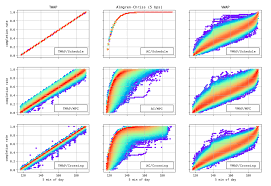
The paper’s MPC (Model Predictive Control) framework solves a small optimisation problem at each decision step, trading off expected transaction cost against deviation from the schedule, with an explicit variance constraint to control execution risk. The result, tested on six months of NASDAQ level-3 order book data: schedule shortfall reduced by 40–50% relative to spread-crossing benchmarks, with meaningful reductions in slippage across order types and sizes.
That 40–50% improvement figure deserves to sit with you for a moment. It means that a strategy which looks marginal in backtest — with a thin edge after costs — might be meaningfully positive with better execution. Equally, a strategy that looks strong in backtest might be negative in practice if execution is naive. The execution layer is not a detail. It is a first-order determinant of live performance.

What This Means for Our Strategy Labs
In Strategy Lab #1 we set transaction costs at 7 basis points round-trip (5bps commission + 2bps slippage) for futures execution at institutional size, with weekly rebalancing. That assumption is reasonable for a large participant in deep futures markets. It would be aggressive — probably wrong — for a retail trader, for whom 15–25bps is more realistic, and it would be far too generous for any equity strategy involving smaller-cap names.
In Strategy Lab #2 we set costs at 5 basis points round-trip for FX major pairs. Again, that is an institutional-grade assumption. Retail FX brokers typically charge 1–3 pips on EUR/USD (roughly 8–25bps depending on account size and broker model), which shifts the economics of a mean reversion strategy substantially.
Both Strategy Labs explicitly noted that costs must be set to realistic values for the reader’s actual execution context. The Lens piece you are reading now is the explanation of why that caveat matters so much.
Three rules of thumb for cost-aware backtesting:
Always test at two cost levels: optimistic and pessimistic. If the strategy only works at optimistic costs, it is fragile. A robust edge survives a realistic range of cost assumptions.
Scale costs with order size. The 5–7bps assumption used in our Strategy Labs is approximately valid at sizes that represent under 1% of daily volume. Above that threshold, market impact rises nonlinearly and needs to be modelled explicitly — not approximated with a flat bps number.
Rebalancing frequency is a cost multiplier. A strategy that rebalances daily pays transaction costs 252 times per year. At 10bps round-trip that is 25.2% of capital annually in costs alone, before any alpha. Weekly rebalancing reduces that to roughly 5%. This is why both Strategy Labs use weekly rebalancing as the default — not because it is theoretically optimal, but because it is the minimum frequency at which cost drag does not automatically overwhelm a realistic edge.
Further Reading
For readers who want to go deeper on execution costs and market microstructure:
arXiv:2603.28898 — McAuliffe et al. (2026), the reference paper for this edition
Almgren & Chriss (2001) — Optimal execution of portfolio transactions — the foundational paper on market impact modelling; still the standard reference two decades later
Cartea, Jaimungal & Penalva — Algorithmic and High-Frequency Trading — the definitive textbook on execution, market microstructure, and optimal trading
QuantLib transaction cost documentation — practical reference for implementing cost models in backtesting frameworks.
Next issue: arXiv Monthly Review — April 2026. Monday April 28th.
Risk Disclosure: The strategies and implementations discussed in Algorithmic Token are experimental and presented for educational and research purposes only. Past performance of any modelled or described strategy is not indicative of future results. All algorithmic trading carries significant financial risk, including the potential total loss of capital. Nothing in this publication constitutes financial advice or an offer to manage investments. ENTER Invest does not manage client funds based on strategies described here unless explicitly and separately contracted to do so. Readers should conduct their own due diligence and consult qualified financial professionals before making any trading or investment decisions.
Shows clearly how ignoring execution costs can make a strategy look much better than it actually is